.png)

Visual and Learning
Children (or adults) with 20/20 vision can have undetected visual problems that interfere with their ability to learn or complete visual tasks
There are 17 skills needed for clear and efficient vision (or how the eyes gather the information). That information is processed and integrated with other sensory systems (vestibular (inner-ear), proprioception (tactile), auditory). Good functional vision involves clarity of vision along with the following:
Most people don’t realize that you need 17 visual skills to succeed in reading, learning, sports, and in life!
| 1 | Eye Movement Control | The ability to move both eyes together to point at an intended target or follow along a path, like a line of text |
| 2 | Simultaneous Focus at Far | Forming a clear image of something in the distance |
| 3 | Sustaining Focus at Far | Keeping an image of something in the distance clear |
| 4 | Simultaneous Focus at Near | Forming a clear image of something close to the eyes |
| 5 | Sustaining Focus at Near | Keeping a clear image of something close to the eyes |
| 6 | Simultaneous Alignment at Far | Lining up both eyes at the same point the distance |
| 7 | Sustaining Alignment at Far | Holding both eyes lined up at the same point in the distance |
| 8 | Simultaneous Alignment at Near | Lining up both eyes at the same point up close |
| 9 | Sustaining Alignment at Near | Holding both eyes lined up at the same point up close |
| 10 | Central Vision (Visual Acuity) | This is where “20/20” vision comes in! |
| 11 | Peripheral Vision | Being able to see what’s on either side of you while your eyes are pointed forward |
| 12 | Depth Awareness | Being able to tell that things are further away or closer up than each other (also know as depth perception) |
| 13 | Color Perception | Being able to tell different colors apart (if you are not color-blind) |
| 14 | Gross Visual-Motor | Moving yourself through space without bumping into things by using information from your vision |
| 15 | Fine Visual-Motor | Writing, sewing, texting, and doing other small and close-up activities with accuracy by using information from your vision |
| 16 | Visual Perception | Being aware of your environment and what is going on around you in your visual field (the area you can see) |
| 17 | Visual Integration | Bringing together your vision and your other senses to accomplish complex tasks, like reading while walking a balance beam |
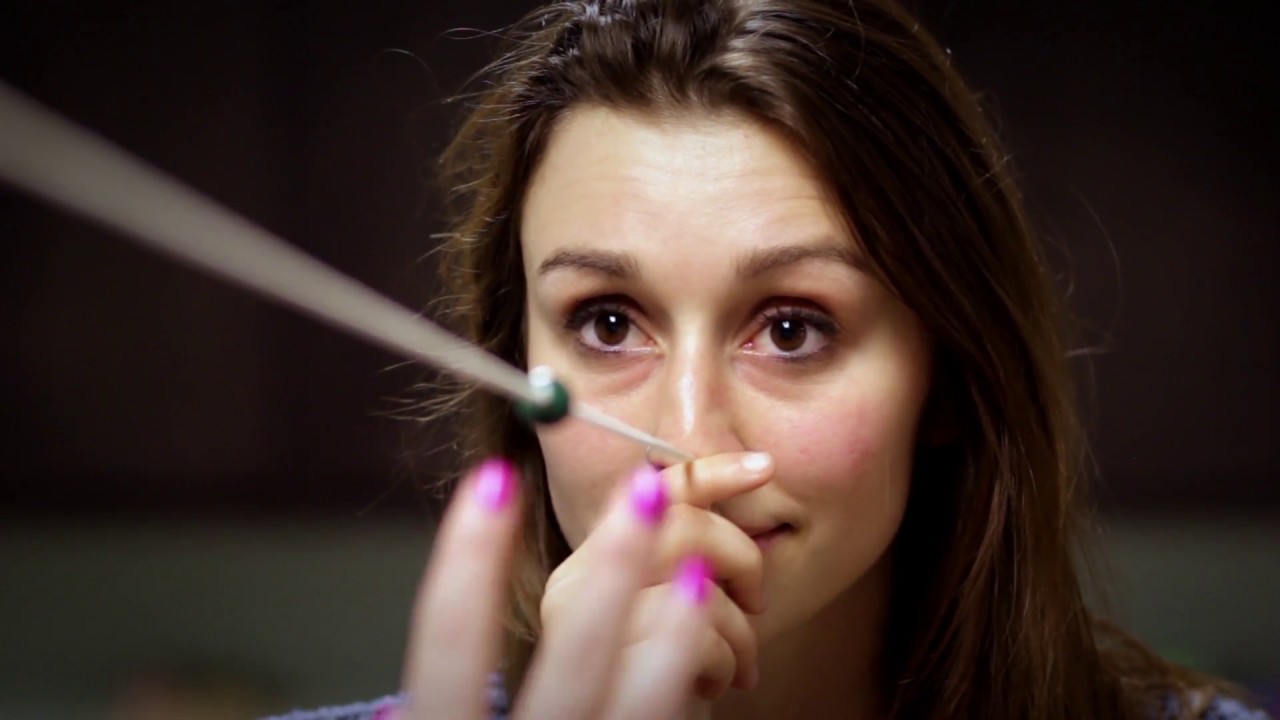
The Hidden Link Between Vision and Learning Video

Vision Help: Vision and Learning
Binocularity or how the 2 eyes work together – in order to have binocularity the eyes must accurately point as a team
Focusing – ability to clear images at all distance – changing focus near to far and far to near – and being to maintain that ability throughout the day
Eye movements – accurately movement of the eyes
Visual Perception
- visual discrimination – just noticeable differences
- visual memory
- visual sequential memory – series of objects, letters of number – involved in being a successful speller
- visual figure ground-being able to sort through the clutter, finding an object in a busy room, attending to teacher when room is full of distraction
- visual closure – seeing part of the information and inferring the rest of it
- body knowledge – understanding where one is in space
- bilateral integration – coordination of both sides of the body
- spatial awareness – understanding where objects are in space
- eye-hand coordination – vision guiding movement – essential for good handwriting and sports
- vestibular/balance – a robust visual system helps control vestibular dysfunction such as a motion sickness, car sickness and head injury rehabilitation
20/20 Isn’t Everything

Why Child Does Not Like to Read
Symptoms of vision-related learning problems:
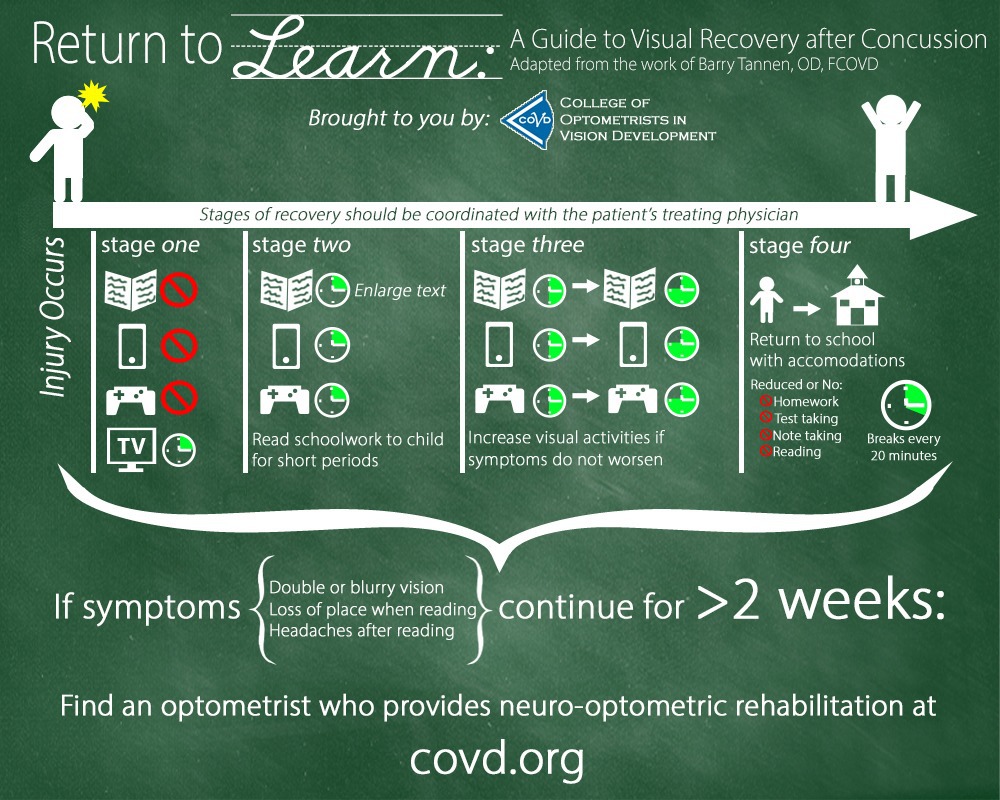
- words swim, move, ghost while trying to read
- complains of blurred vision
- holds things closely
- headaches when reading
- eye strain or complaining of tired eyes
- only able to read for a short period of time
- poor reading comprehension or comprehension decreases over time
- moves excessively when reading
- loses place when reading
- uses finger to keep place
- mistakes words with similar beginning
- trouble visualizing what is read
- poor speller
- poor posture/head tilt present when reading
- covers an eye when reading
- can respond orally but not in writing
- poor handwriting
- cannot stay on the line when writing
- poor copying skills
- trouble with right and left
- reverses letters and words
- difficulty with spatial relationships
- frustrated with reading and homework
- can get through school day- performing well academically- at end day completely exhausted and homework is a struggle or takes an excessive amount of time to complete
- labeled as hyperactive, lazy or learning disabled
* There may be a learning related visual problems that does not relate to 20/20 vision
Vision is the dominant sensory system (80%) used for reading and learning. If a deficient present that inhibit or makes it a struggle for the eyes to gather information accurately and efficiently, the information is coming in jumbled. The child must spend time and energy un-jumbling the information and then processing it.
Visual issues can affect adults as well. These deficient can influence work performance and can be similarly treated.
